
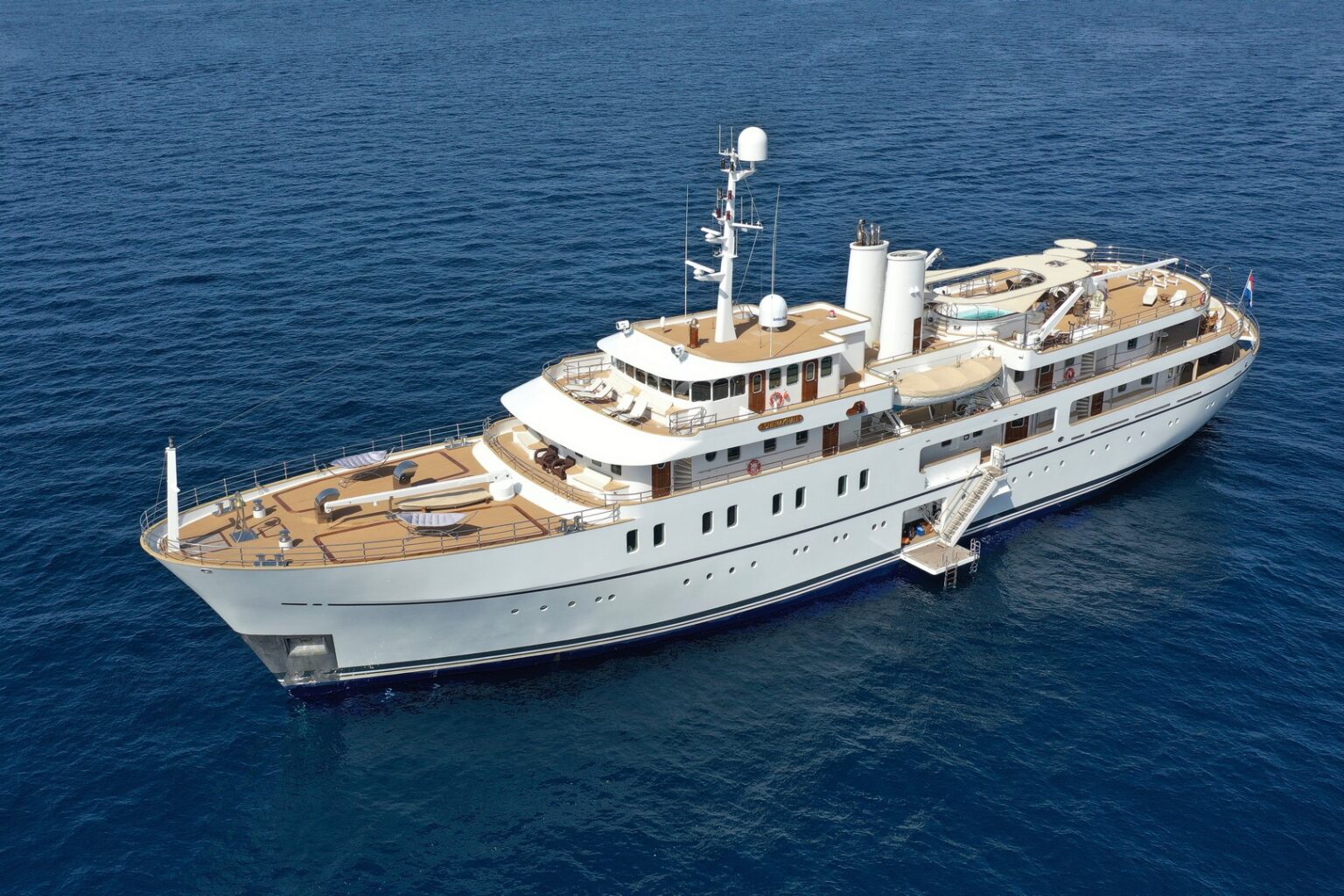
Not every superyacht is suited to the Arctic. Fewer still can take a large party into remote, high-latitude waters without sacrificing comfort, atmosphere or operational credibility. That is where M/Y Sherakhan stands apart. With the volume of a small ship, the pedigree of a converted Dutch training vessel, and a charter reputation built on global itineraries, Sherakhan occupies a rare position in the market: a true expedition-style yacht capable of turning Arctic cruising into an experience that is both ambitious and genuinely luxurious.
At 69.65 metres with a steel hull, aluminium superstructure and a gross tonnage of around 1,945GT, Sherakhan was never conceived as a conventional Mediterranean showpiece. Originally launched in the 1960s and later transformed into a yacht by Verkerk Yachting Projects, she was shaped instead by the idea of long-range, go-anywhere cruising. That heritage still matters. In Arctic terms, capability is not defined by aesthetics alone, but by space, seakeeping, logistics, endurance and the ability to support a serious operational program. Sherakhan’s full-displacement platform, substantial beam, generous storage and professional-ship proportions make her better suited than many lifestyle-led yachts to the realities of remote exploration. Public charter information lists a cruising speed of around 11 knots, maximum speed of 13 knots and a charter cruising range of approximately 3,500 nautical miles, with some brokers also quoting a broader passage range of up to 9,000 nautical miles depending on operating profile and reserves.
That does not mean Sherakhan should be described casually as an icebreaker or presented as a vessel for unrestricted polar operations. The Arctic demands humility. Sea-ice conditions, remoteness, sparse infrastructure, communications limits, environmental controls and voyage-planning discipline all remain central. The International Maritime Organization’s Polar Code has raised the bar for operating standards in polar waters, and prudent Arctic programs depend as much on route selection, seasonal timing, local expertise, weather and ice intelligence as on the yacht itself. Sherakhan’s strength is that she offers the right foundation for that kind of expedition planning: robust construction, large-ship volume, the ability to carry guests and staff in comfort, multiple tenders for shore access, and a track record as a yacht positioned for ambitious cruising rather than marina-hopping. In other words, she is best understood not as a pure polar specialist, but as a highly credible expedition yacht for carefully planned Arctic itineraries in the right conditions.
Where Sherakhan becomes especially compelling is on Arctic routes that combine spectacle with manageable operational logic. Svalbard is a prime example: close enough to mainland logistics to be viable, yet wild enough to deliver glaciers, pack-ice edges, seabird cliffs and unforgettable wildlife encounters. Greenland offers an even more atmospheric proposition, with immense fjord systems, iceberg-laden anchorages and a sense of scale that perfectly suits a yacht of Sherakhan’s size and presence. She has also long been associated with adventurous charter programming in remote regions, including Greenland and Antarctica, which reinforces her positioning as a yacht for guests who value access and narrative over conventional cruising routines. For an owner or charterer planning a high-latitude season, that matters. The best Arctic yachts are not simply those with bold brochures, but those whose design, crew culture and guest layout support the rhythm of expedition life.
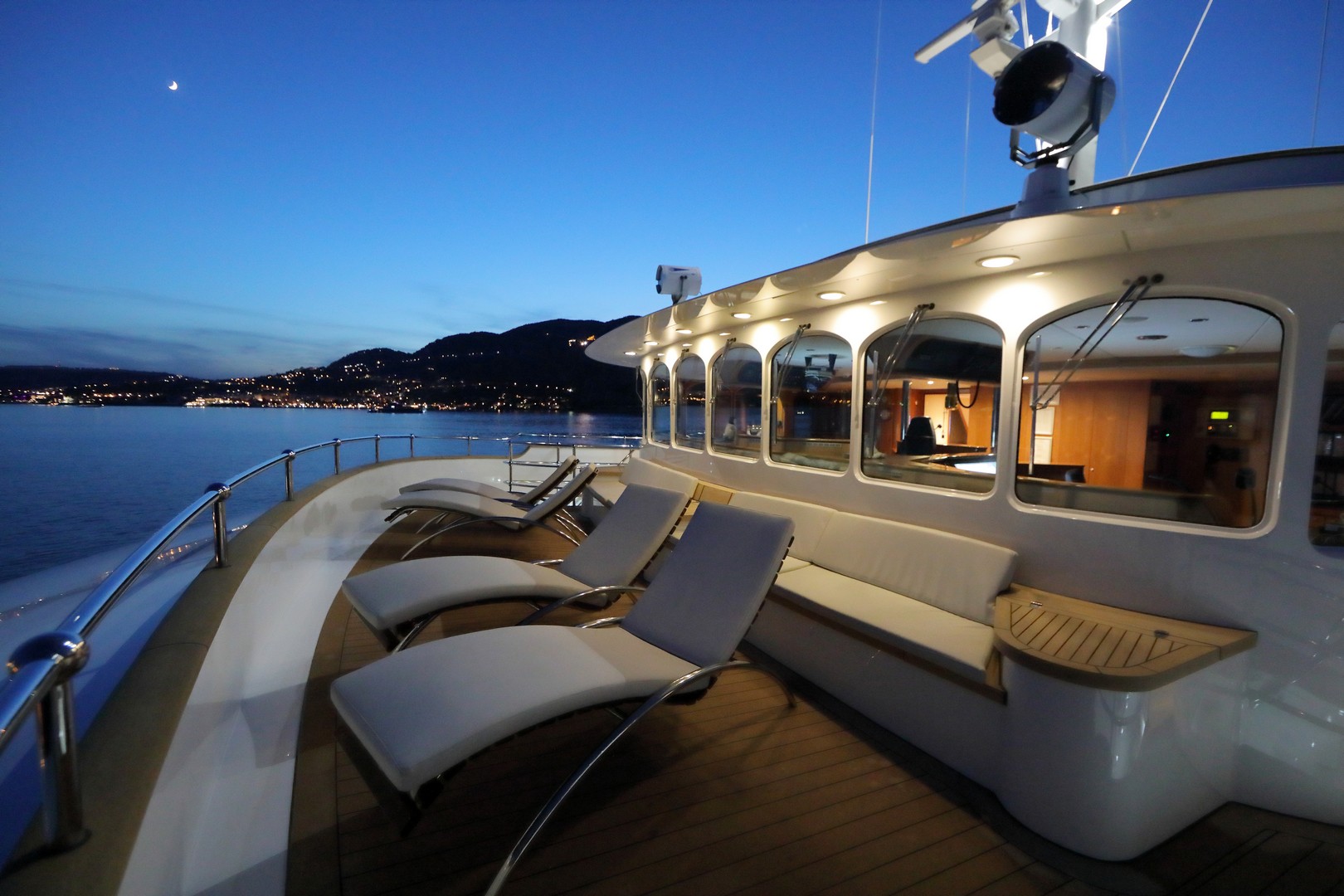
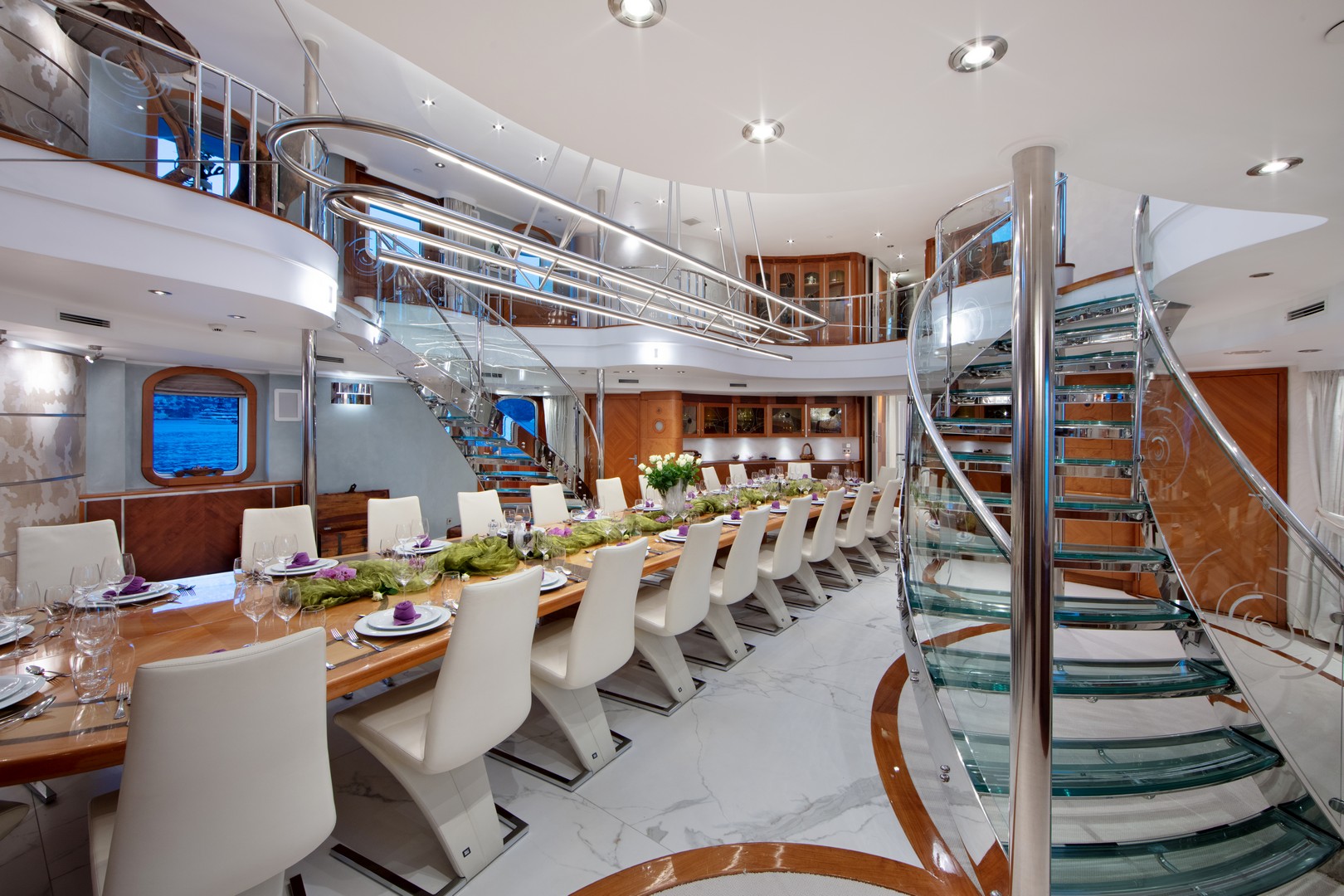
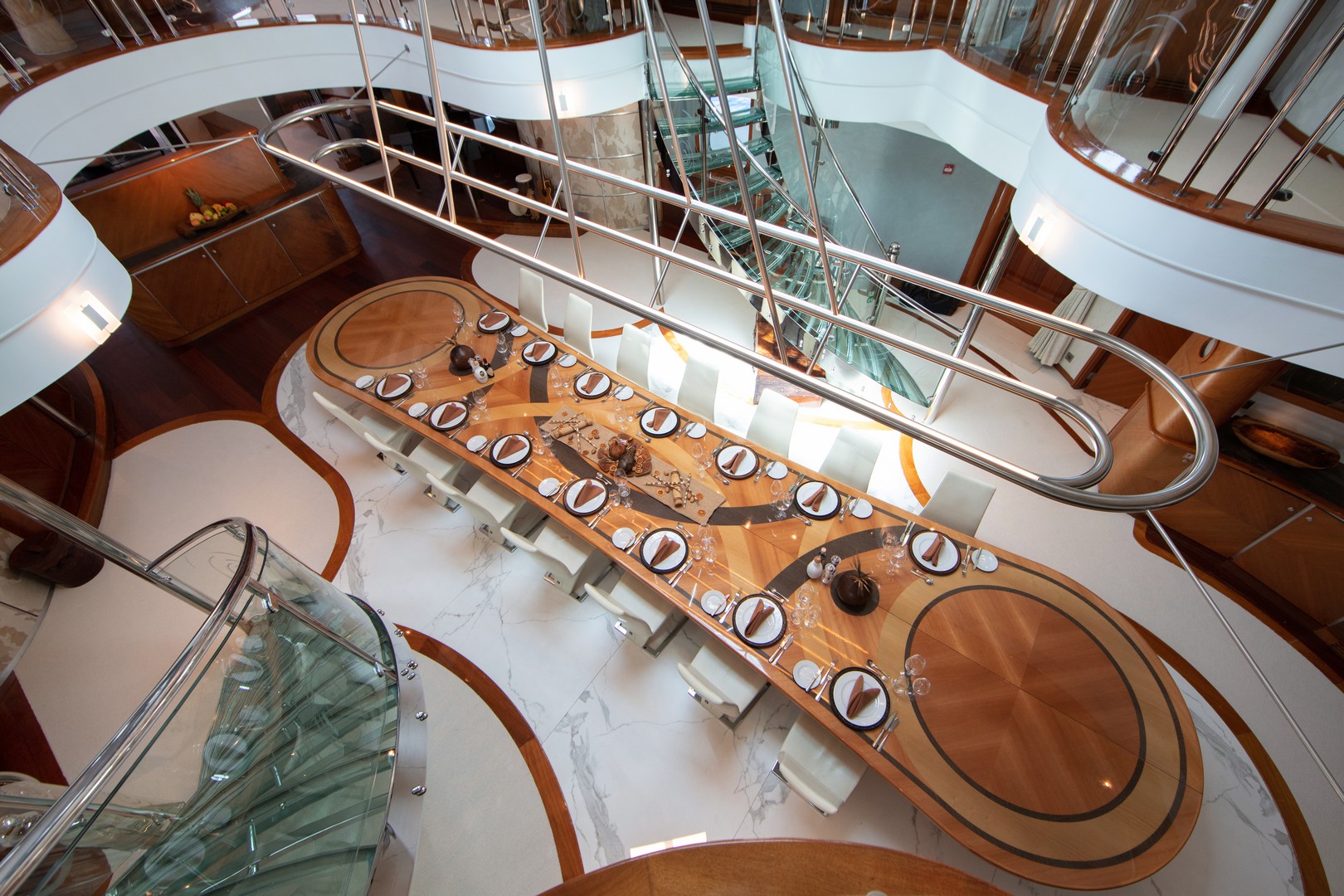
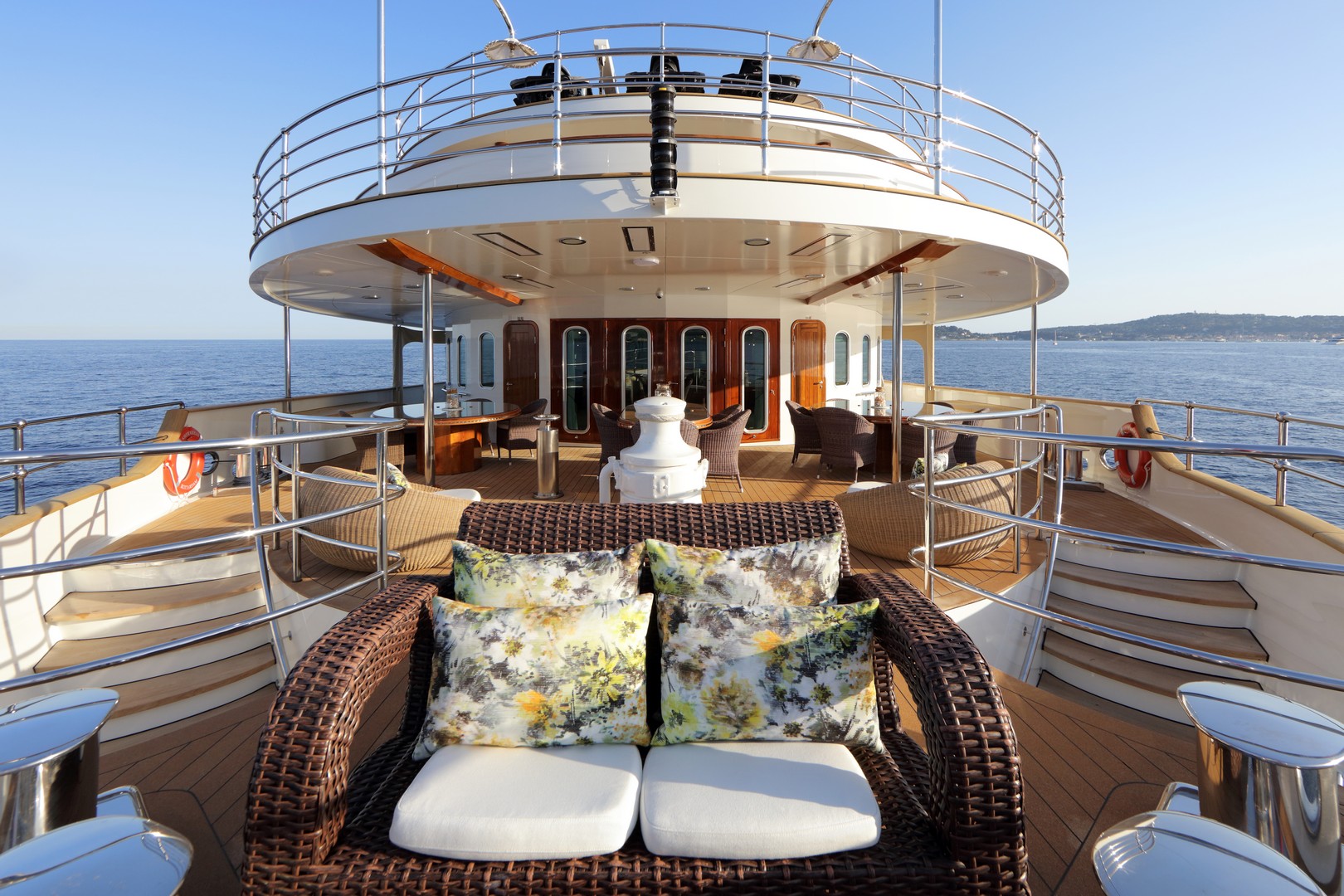
Sherakhan does that unusually well. She can host up to 26 guests in 13 cabins, supported by a crew of 19, which immediately changes the nature of an Arctic voyage. Instead of limiting the experience to a small owner’s party, she can bring extended family, multiple generations or a substantial guest group into a region that normally feels inaccessible at this level of comfort. Her seven-metre atrium, vast dining space, observation points, spa, sauna, gym and large deck areas mean that time on board remains rewarding even when weather closes in or itineraries shift. The crow’s nest-style observation lounge is particularly well suited to high-latitude cruising, where the ability to watch landscapes, wildlife and shifting conditions from elevation adds to the sense of immersion. In warmer waters, her toy inventory is about leisure; in the Arctic, her tenders and deck spaces become part of the exploration toolkit, supporting landings, photography, guided excursions and the rhythm of discovery.
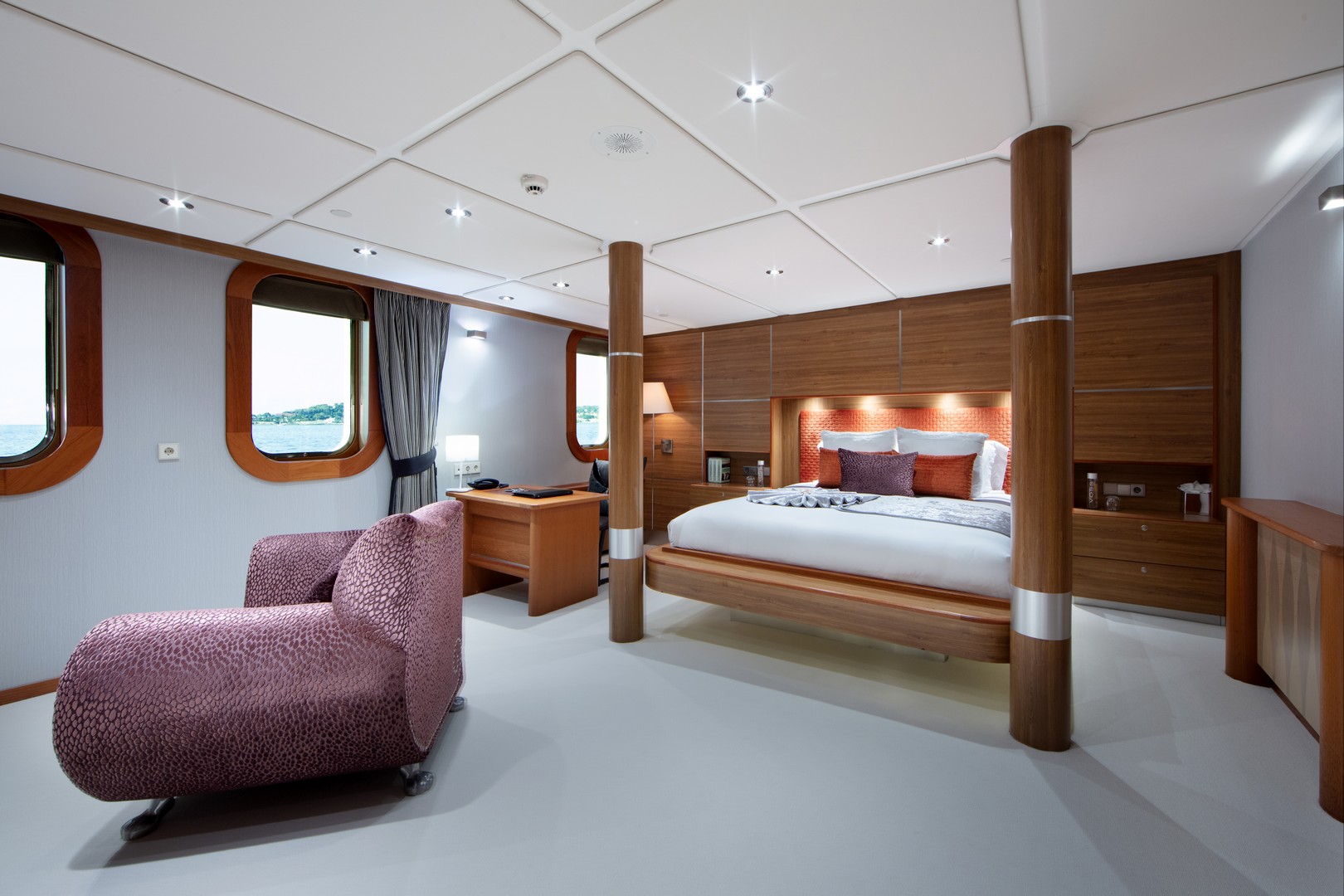
The result is a yacht that makes a persuasive case for Arctic cruising not because she is extreme, but because she is balanced. Sherakhan combines the romance of an expedition vessel with the guest capacity, comfort and versatility of a major charter yacht. She is not the last word in heavy-ice capability, and any serious Arctic deployment would still need to be shaped around season, route, permitting, expert support and conservative operational judgment. But for Svalbard, Greenland, Icelandic crossover programs and other carefully planned northern expeditions, she offers something rare: the ability to experience the Arctic as a grand, social and deeply memorable voyage rather than a stripped-back technical exercise. In a market where the word explorer is often overused, Sherakhan remains one of the more convincing examples of a yacht that can genuinely take guests further.