
A professional framework for evaluating title, technical completion, delivery risk and residual value
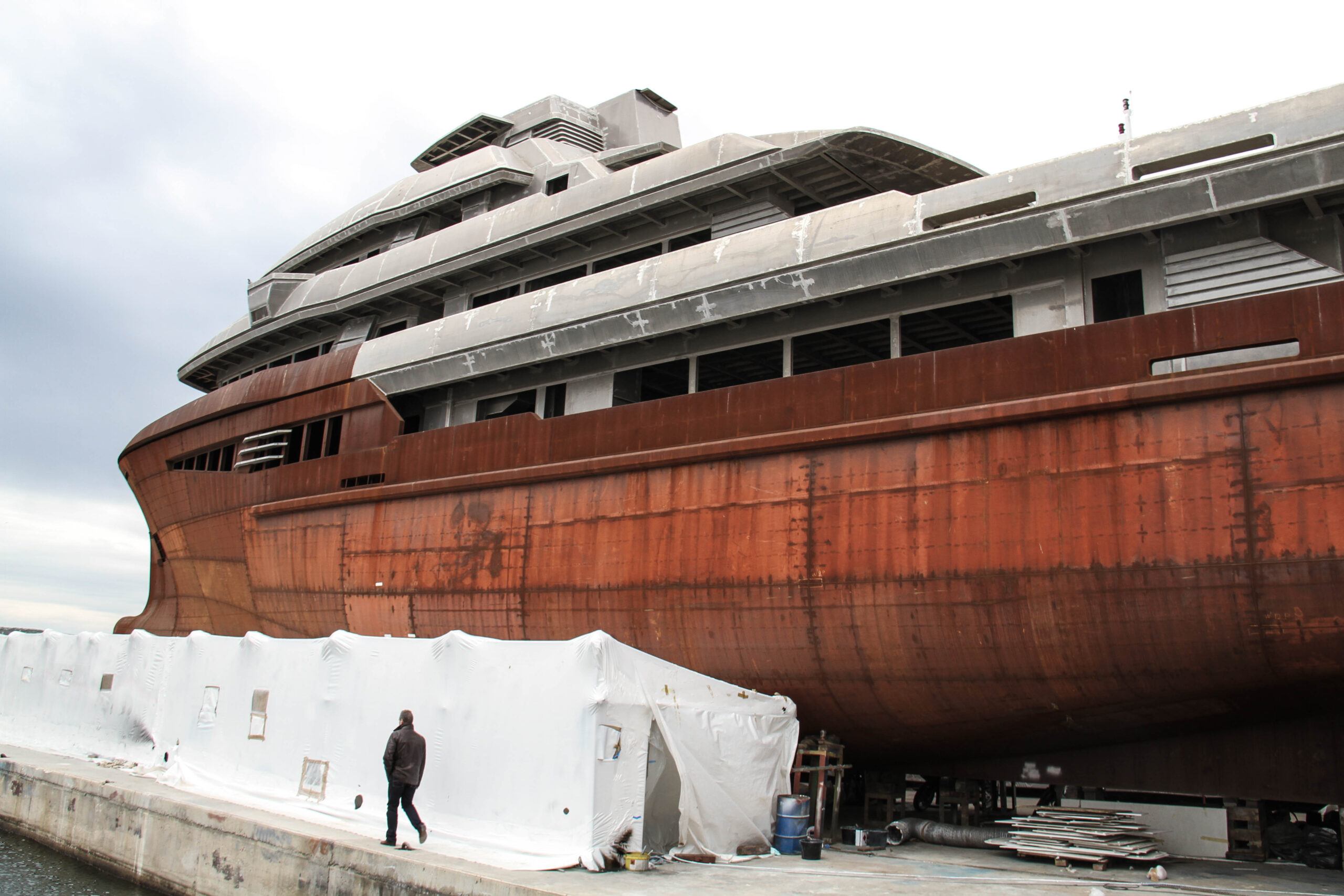
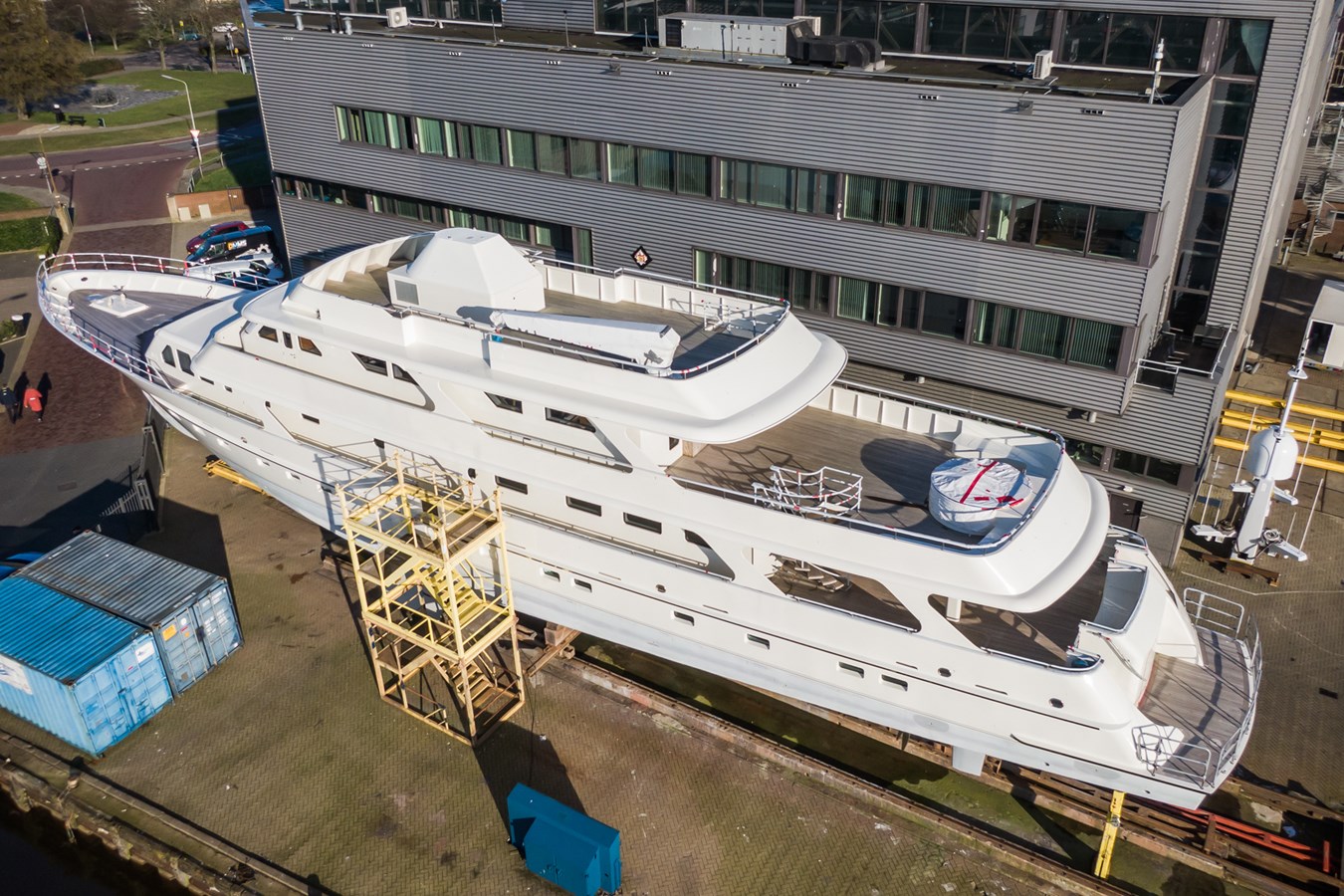
A semi-completed yacht can present a compelling acquisition opportunity, but only when the discount is sufficient to compensate for the legal, technical, execution and market risks that remain. The amount already spent, or the percentage reportedly completed, is not the investment case. The investment case is the relationship between verified value in place, risk-adjusted completion cost, time to delivery and the market value of the finished asset.
Accordingly, the decision should be approached as the acquisition of a complex project rather than the purchase of a conventional yacht. Before discussing aesthetics, specification upgrades or potential charter income, a buyer should establish whether the asset can be acquired with clear title, completed to an acceptable technical and regulatory standard, delivered within a credible budget and programme, and ultimately operated or sold into a sufficiently liquid market.
Executive Investment Test
A project becomes potentially investable when independent due diligence supports all five of the following propositions:
- the seller has an enforceable right to transfer the yacht, its equipment and the associated technical information;
- the physical condition and documentary status of the project are substantially understood;
- a competent completion team can deliver the required specification and certification;
- the total cost and delivery programme remain credible under downside scenarios; and
- the completed yacht’s supportable market value provides an adequate margin for uncertainty and illiquidity.
If any one of these propositions cannot be established, the apparent discount may simply be the market’s price for unresolved risk.
01 | Confirm the Asset, Title and Transaction Perimeter
The first stage is to determine precisely what is being acquired and who has authority to sell it. The review should identify the legal owner of the hull, machinery, owner-supplied equipment, materials in storage and intellectual property. It should also establish whether the proposed transaction is an asset purchase, a share purchase or a transfer through an insolvency or enforcement process, because each structure may carry different liabilities and remedies.
Legal due diligence should address registered ownership, mortgages, liens, unpaid yard and subcontractor claims, retention-of-title rights, arrest risk, tax and customs status, importation history, insurance claims, disputes, warranties and restrictions on the transfer of design rights, software, drawings or technical data. The International Maritime Organization notes that ship registration establishes a vessel’s nationality and connects it to the jurisdiction and control of its flag State; registration conditions are determined by the relevant State. This makes registry evidence important, but not a substitute for jurisdiction-specific legal advice and independent title searches.
The buyer should also identify contracts that must be assigned, novated, replaced or terminated. A favourable purchase price can be undermined if essential design licences, equipment warranties, class approvals or supplier commitments do not transfer with the yacht.
02 | Establish the Verified Completion Baseline
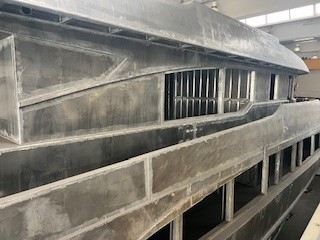
A stated completion percentage is rarely sufficient for investment analysis. It may reflect expenditure, weight, fabrication progress or a subjective assessment by the yard, none of which necessarily corresponds to the cost or complexity of the work that remains. The project should therefore be re-baselined through an independent condition survey, documentary audit and system-by-system review.
The physical inventory should cover the hull and superstructure; coatings and corrosion protection; propulsion and machinery; electrical generation and distribution; navigation and communications; safety systems; piping; HVAC; hotel systems; interiors; tenders and toys; loose equipment; spares; and materials held on- or off-site. For each item, the buyer should record ownership, location, condition, installation status, preservation history, warranty position and estimated cost to complete or replace.
The technical-document review should assess the maturity and ownership of general arrangements, naval architecture, structural calculations, stability information, system diagrams, equipment schedules, approved drawings, software, manuals, inspection records, test certificates and change logs. Gaps in the documentation can be as material as physical defects because undocumented work may require redesign, reapproval, reinspection or destructive verification.
Classification status must be tested independently. IACS explains that classification societies establish and apply technical requirements relating to the design, construction, maintenance and survey of ships and marine facilities. The buyer should therefore confirm the selected society, class notation, approval status, outstanding comments, survey history, conditions or recommendations, and the consequences of any suspension, withdrawal or transfer of class.

03 | Define the Regulatory and Operating Case
The intended use of the yacht determines the relevant compliance pathway. Private operation, commercial charter, passenger capacity, gross tonnage, flag, cruising area and build date may alter the applicable rules, survey requirements, manning obligations and operating costs. These decisions should be made before the completion specification is fixed, not after construction has resumed.
For relevant Red Ensign Group vessels, the current framework is the REG Yacht Code rather than the superseded LY3 regime. UK Maritime and Coastguard Agency guidance states that Part A applies to certain commercial yachts of 24 metres and over carrying no more than 12 passengers, and that the 2024 version is reflected in the current notice. Other flags and operating profiles will require their own analysis.
A regulatory gap assessment should identify every approval, survey, test, certificate and operational prerequisite still required. It should also distinguish mandatory requirements from owner preferences. This avoids two common errors: underbudgeting compliance work and overcapitalising features that the resale market may not reward.
04 | Build a Fully Loaded Completion Budget
The completion budget should be derived from a detailed scope of work and independently challenged. It should separate committed contracts, firm quotations, provisional sums, allowances, owner decisions and unresolved technical assumptions. The central question is not whether the yacht can be completed in theory, but whether it can be completed to the required standard for a cost that remains defensible under stress.
A fully loaded budget should typically include:
- design development, naval architecture and engineering;
- yard labour, subcontractors, supervision and project management;
- equipment, materials, logistics, storage and preservation;
- class, flag, survey, legal and specialist advisory fees;
- transport or relocation, towage, insurance and site mobilisation;
- commissioning, harbour trials, sea trials and defect rectification;
- crew recruitment, training, spares, manuals and operational readiness;
- financing costs, taxes, duties and working capital; and
- a contingency calibrated to the maturity of design, procurement and inspection evidence.
The model should distinguish contingency from scope. Known work belongs in the base cost; contingency is intended for uncertainty, not for items that have merely been omitted. Assumptions should be traceable, and major exposures should be tested through sensitivity analysis.
05 | Select the Completion Strategy and Governance Model
The current shipyard may retain valuable knowledge, facilities and supplier relationships, but continuity should not be accepted without challenge. Its financial standing, workforce, technical capability, quality systems, subcontractor base, capacity, dispute history and willingness to provide meaningful warranties should be reviewed alongside alternative yards and specialist completion managers.
Any relocation case should include transport risk, preservation, dismantling and recommissioning, labour differentials, local taxes, infrastructure, loss of warranties, class implications and the time required to rebuild the technical team. The lowest headline quotation may not represent the lowest risk-adjusted cost.
Whatever strategy is selected, the buyer needs an effective governance structure. This should define authority levels, reporting lines, design freeze, change control, procurement approval, cost certification, quality assurance, document control, milestone acceptance and dispute escalation. Payments should be linked to independently verified progress and deliverables wherever practicable. Strong governance converts an uncertain construction exposure into a project that can be measured and controlled.
06 | Produce a Credible Delivery Programme
Time can be the principal source of value in a semi-completed yacht. Earlier delivery may provide earlier private use, charter income or resale optionality while reducing exposure to future build-cost inflation. That advantage exists only if the delivery programme is technically coherent and resilient.
The programme should integrate remaining design approvals, long-lead procurement, fabrication, installation, inspection, class and flag hold points, system energisation, commissioning, harbour trials, sea trials, crew familiarisation, certification and handover. The critical path, resource constraints and dependencies should be visible. Allowances should be made for late equipment, redesign, failed tests, rework, weather, yard congestion and regulatory comments.
Investment analysis should compare at least a base case, a downside case and a severe-delay case. Each scenario should show total capital employed, financing and holding costs, the date of operational readiness, revenue deferral and any effect on residual value. A schedule is not credible merely because it is detailed; it is credible when the underlying resources, approvals and supply-chain commitments support it.
07 | Test the Completed Yacht’s Market Value
The completed yacht should be valued as the asset the market is likely to perceive at delivery, not as the sum of historic expenditure and forecast completion cost. A defensible appraisal should consider comparable transactions and current listings, adjusted for size, age, specification, condition, builder and designer pedigree, completion yard, range, layout, technical capability, warranty package, operating cost, class and flag status, documentation quality and market timing.
Where reliable evidence is available, achieved transaction prices are generally more probative than asking prices. The valuation should also state its basis, assumptions, information limitations and sensitivity to the completion date and specification. RICS describes its Red Book Global Standards as a globally recognised framework intended to support rigorous and consistent valuation practice. A specialist yacht valuer should adapt recognised valuation principles to available market evidence and the particular characteristics of the vessel.
Liquidity must be addressed explicitly. A distinctive yacht may command a premium from the right buyer yet remain difficult to sell within a fixed period. The analysis should therefore consider an orderly sale, a time-constrained sale and a delayed market entry. The investment margin should be sufficient not only for completion risk, but also for brokerage, holding costs, price negotiation and an imperfect exit market.
08 | Quantify the Risk-Adjusted Investment Case
The decision model should bring the workstreams together in a single, transparent equation:
Risk-adjusted value margin = supportable completed value − acquisition cost − fully loaded completion cost − financing and holding costs − quantified risk allowance − exit costs
This margin should remain persuasive after applying downside assumptions to cost, schedule and value simultaneously. A project that appears attractive only under the most optimistic case is not adequately priced for risk.
The investment committee or buyer should also define walk-away conditions before negotiations intensify. Examples include unresolved title, inaccessible design rights, material structural uncertainty, an unfinanceable completion plan, loss of class continuity, an unacceptable regulatory gap, insufficient yard capacity or a downside margin below the required return threshold.
Investment Decision
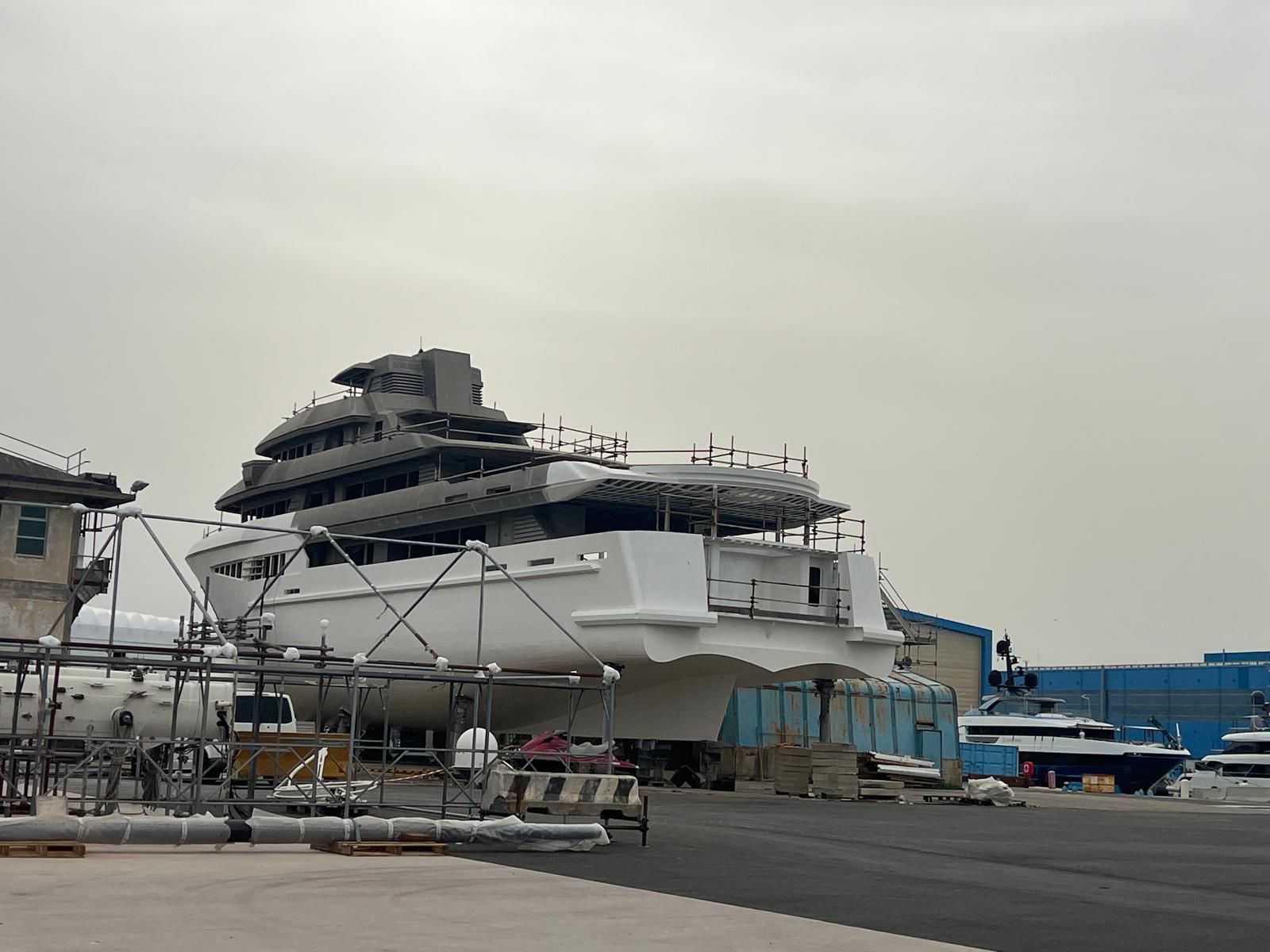
A semi-completed yacht becomes an investable opportunity when uncertainty has been converted into evidence, priced into the acquisition and placed under enforceable project controls. The strongest transactions usually share four characteristics: the buyer understands exactly what is owned; the remaining work is defined and governed; the completion budget and programme survive realistic stress testing; and the finished yacht has a supportable value and credible exit route.
The discount attracts attention. Verification, control and a sufficient margin of safety create the opportunity.
In some cases, the most valuable outcome of due diligence is not a lower offer, but a disciplined decision not to proceed.