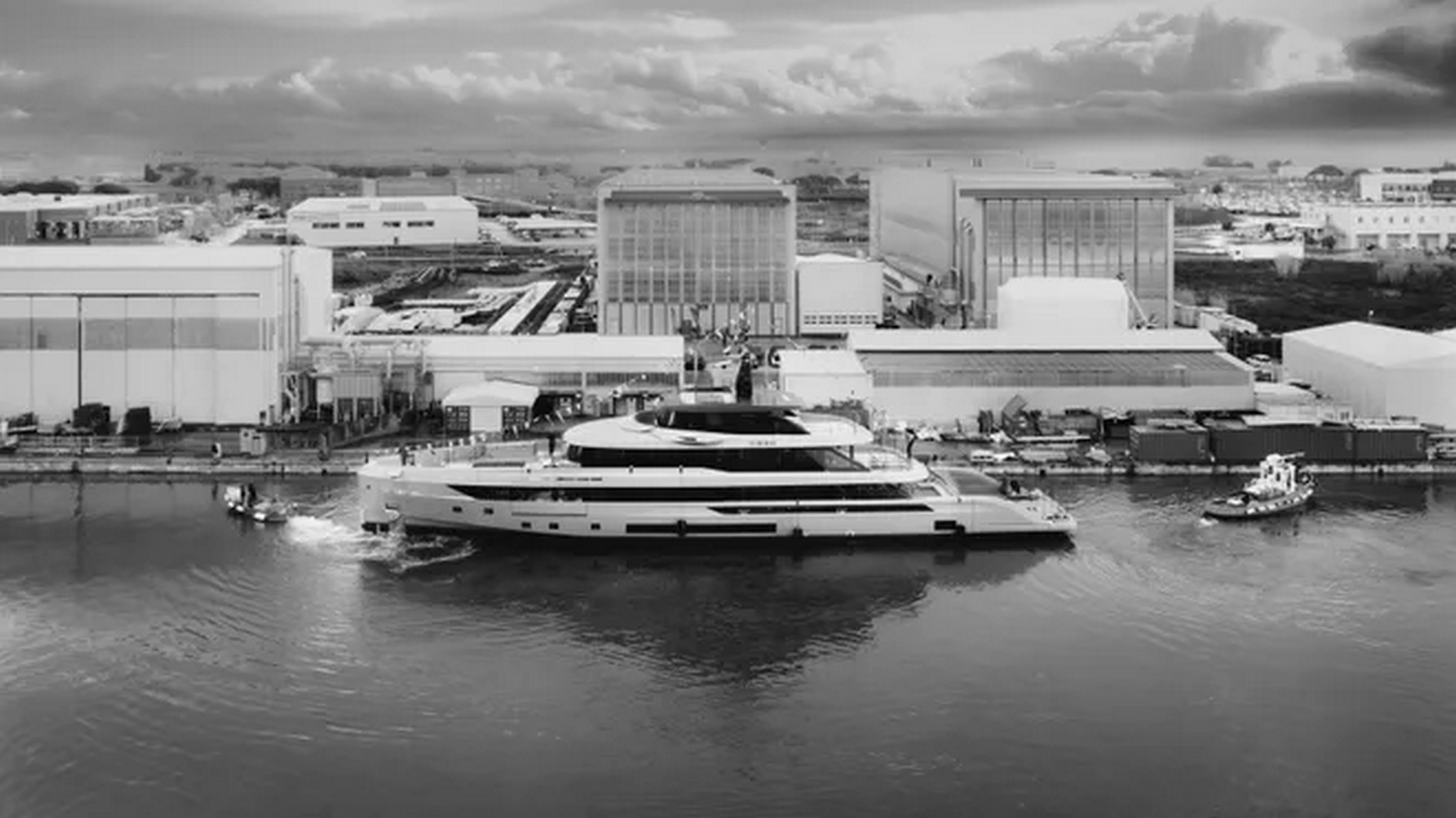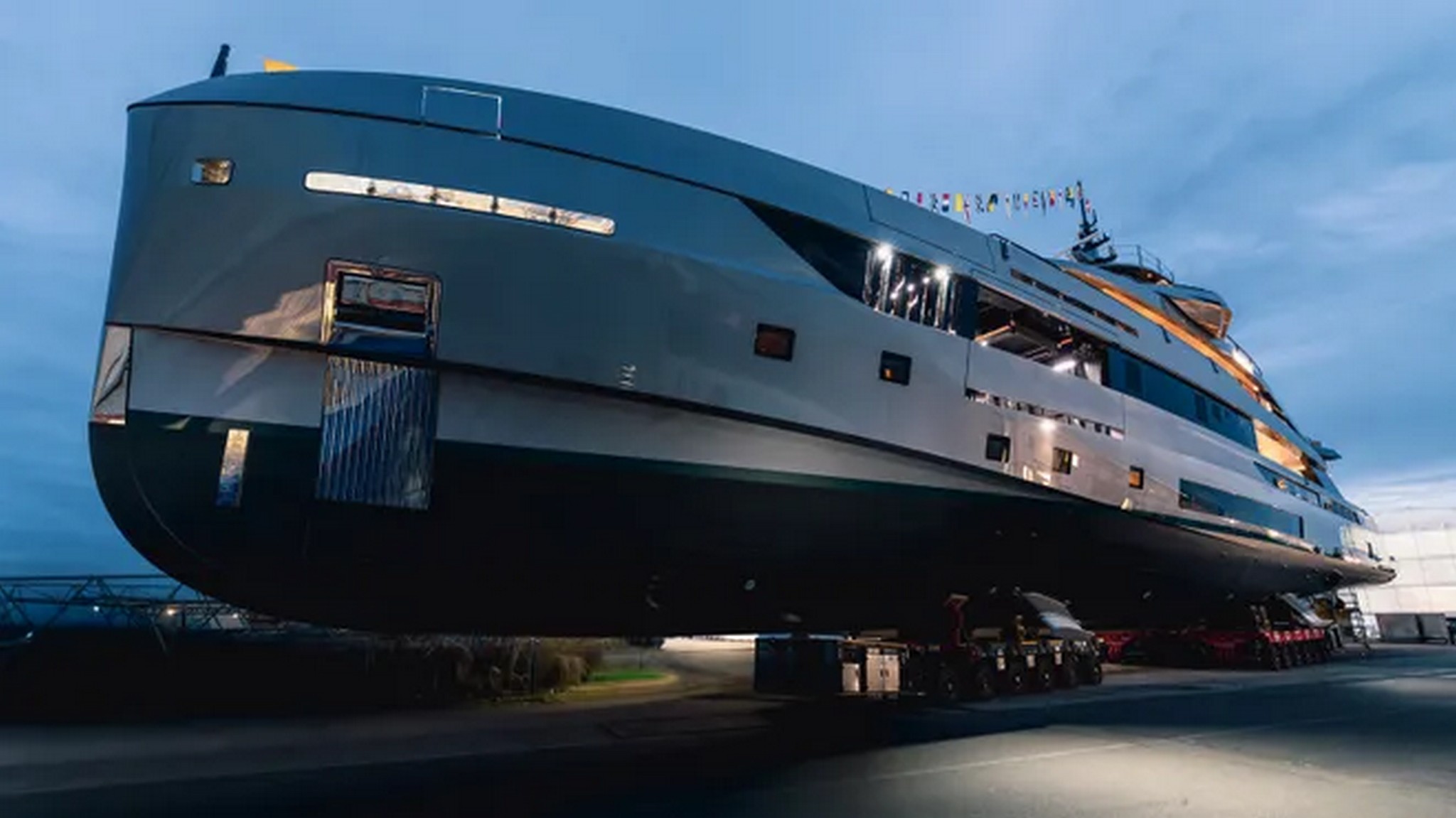
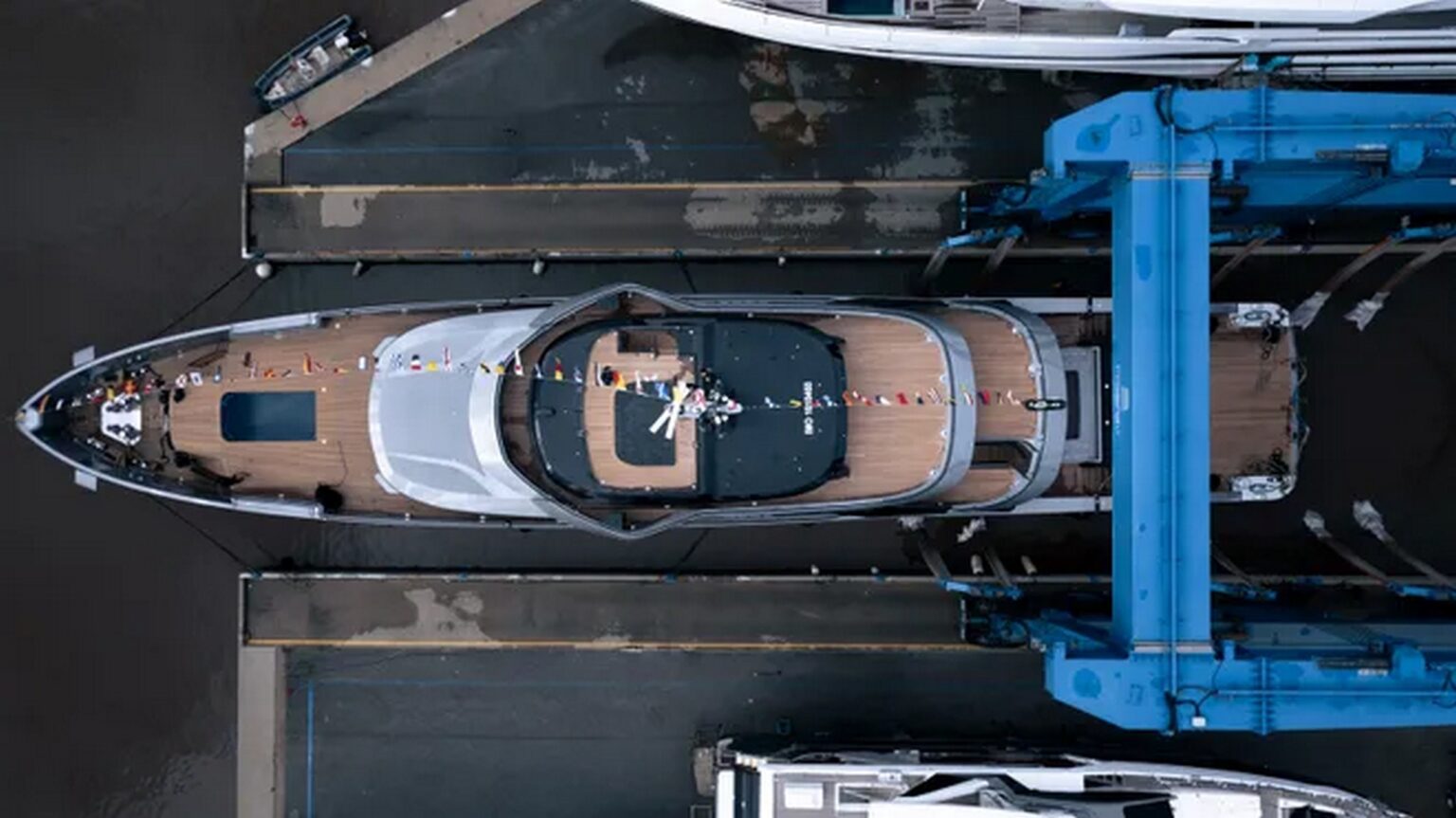
Italian yard Rossinavi has unveiled Heed, a fast‑displacement, full‑custom superyacht measuring 52.7 metres (commonly rounded to 53m), after a deliberately under‑the‑radar build in Pisa. The launch was marked by an invitation‑only ceremony in late January, with the yard scheduling festivities on January 24, while trade and consumer outlets reported the debut across January 26–27. Previously identified only as hull FR052, the yacht now carries the name Heed, reflecting an owner‑driven brief executed in close collaboration with the shipyard and a seasoned owner’s representative.
Design authorship—and a rare owner’s deck
Exterior stylist Alberto Mancini draws a taut, architectural profile whose metallic grey hull accentuates the interplay of light and shadow from sunrise to dusk, giving the yacht a subtly shape‑shifting character without decorative excess. Working consciously below the 499GT threshold, the team rethought proportions and spatial relationships—most notably by positioning the owner’s suite forward on the upper deck, effectively granting the owner a private “apartment” with cinematic views and separation from guest circulation. Just ahead, a dedicated pool with counter‑current jets turns the foredeck into a secluded wellness zone.
While exterior design credit is clear, trade reporting differs on naval architecture: BOAT International attributes naval architecture to Mancini alongside the styling, whereas SuperYacht Times lists Arrabito Naval Architects—an occasional Rossinavi partner—on the technical side. Either way, the end result is a sub‑500GT platform that reads larger than its tonnage suggests thanks to careful volume management and glazing.
Main‑deck transparency and social flow
A fully glazed main saloon captures uninterrupted sea views and floods the interior with natural light, pushing the social heart of the yacht right to the water’s edge. Aft, a panoramic dining area adds a starboard fold‑down balcony—one of those small but meaningful gestures that dissolves the boundary between interior hospitality and the anchorage outside.
Beach club to observation deck: elevating the edges
Low and close to the sea, Heed’s beach club compounds its appeal with fold‑down platforms and a pool, expanding the beam for barefoot living and direct water access. Up high, what might read as a conventional hardtop is in fact a dedicated observation deck: an elevated, wind‑kissed nook designed expressly for unhurried lookout moments far from the social hum below.
Achille Salvagni’s interior calm
Inside, Achille Salvagni Architetti brings his distinctly Roman brand of contemporary serenity, using sculptural forms and pared‑back palettes to keep sightlines and light as the dominant “materials.” The approach suits Heed’s emphasis on connection to sea and sky: with glass doing as much storytelling as stone or timber, the décor orchestrates mood rather than shouting for attention.
Silent nights at anchor
A built‑in battery system allows hotel loads to run with generators off while at anchor, cutting noise and vibration for hushed evenings and first‑light swims. It’s a feature that has swiftly moved from “nice to have” to near‑mandatory in this size bracket, aligning Heed with the market’s shift toward quieter, lower‑impact onboard life.
The numbers that matter
Key dimensions include a 9.1‑metre beam and 2.5‑metre draft, packaging the yacht at a svelte 499GT while preserving generous exterior terraces and unbroken glazing runs. The aluminium hull‑and‑superstructure construction plays to Rossinavi’s long practice in light‑metal builds, strengthening the shipyard’s fast‑displacement portfolio.
An owner’s project—guided by experience
Rossinavi credits a “close and energetic” dialogue with the owner from concept to launch, with Matty Zadnikar of SeaNet SuperYachts acting as owner’s representative to align day‑to‑day practicality with design intent. That hands‑on approach is visible in the layout’s priorities—privacy, sea‑level living, and quiet operation—that cater to how the yacht will be used rather than how it will look in a rendering.
Where Heed sits in Rossinavi’s current slate
The launch arrives as Rossinavi advances multiple full‑custom projects, including the 47‑metre Berserk 47—an explorer‑leaning platform revealed in early 2025 with long‑range ambitions and serious toy‑carrying ability, currently targeting a 2026 delivery. Together, the low‑profile glamour of Heed and the muscular functionality of Berserk 47 sketch a yard equally comfortable shaping meditative Mediterranean cruisers and far‑ranging adventure craft.
A note on name confusion
Heed should not be confused with the Azimut 35m charter yacht of the same name; that vessel is a different platform altogether, with separate dimensions and performance.
In the yard’s own words
“It has been an extremely stimulating project… a yacht designed to be lived on,” says Rossinavi COO Federico Rossi, a sentiment borne out by the owner‑deck arrangement, the alfresco‑first terraces, and the quiet‑anchoring brief. Mancini frames the design challenge succinctly: sub‑500GT limits can liberate thinking when you treat proportion as a creative constraint, not a cap.
Specification Snapshot
- Length: 52.7m (53m) • Beam: 9.1m • Draft: 2.5m • Gross Tonnage: <499GT • Hull/Superstructure: Aluminium • Hull Colour: Metallic grey.
- Exterior Design: Alberto Mancini • Interior: Achille Salvagni Architetti • Naval Architecture: Reported variously as Alberto Mancini or Arrabito Naval Architects.
- Standout Features: Owner’s upper‑deck suite with private forward pool (counter‑current); fully glazed main saloon; panoramic dining with fold‑down balcony; beach club with pool and folding terraces; observation deck; battery system for silent nights at anchor.
Why it matters
In an era where “bigger” often masquerades as “better,” Heed demonstrates that living smarter within the 499GT envelope can deliver a richer owner experience—quieter, closer to the water, and more private—without sacrificing presence or poise. For buyers considering a 50–55m custom, it’s a compelling case study in allocating volume to the places that change how you actually live aboard.
Sources & further reading
- BOAT International: Rossinavi launches custom 53m superyacht Heed
- Megayacht News: Heed launch at Rossinavi heralds elevated living
- SuperYacht Times: 53m Rossinavi Heed launched
- YachtBuyer: Watch—Rossinavi launches 53m full‑custom Heed in Pisa
- Robb Report: Rossinavi just launched Heed, its new 173‑foot superyacht
- Rossinavi: Heed launch event schedule (private)
- YachtCharterFleet: Heed (Rossinavi) overview & key specs
- BOAT International: Rossinavi unveils 47m Berserk 47 (2025) • SuperYacht Times: Berserk 47 in build