
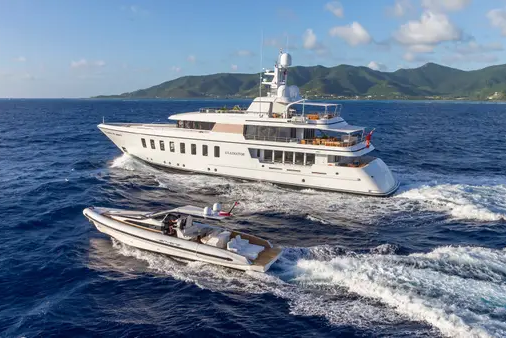
The Feadship F45 Series: A Modern Classic in Full Command of Its Legacy
In the rarefied world of Northern European superyacht craftsmanship, few names cut through the noise with the quiet authority of Feadship. Among its most recognizable triumphs stands the F45 series—a limited run of semi‑custom 45‑meter yachts that has, over two decades, achieved something unusual in yachting: lasting relevance.
The F45 line blends Feadship’s technical pedigree with modular design flexibility, resulting in yachts that not only endure aesthetically but also maintain exceptional market value when properly cared for. A survey of active hulls today demonstrates precisely why.
A Lineage of Quiet Excellence
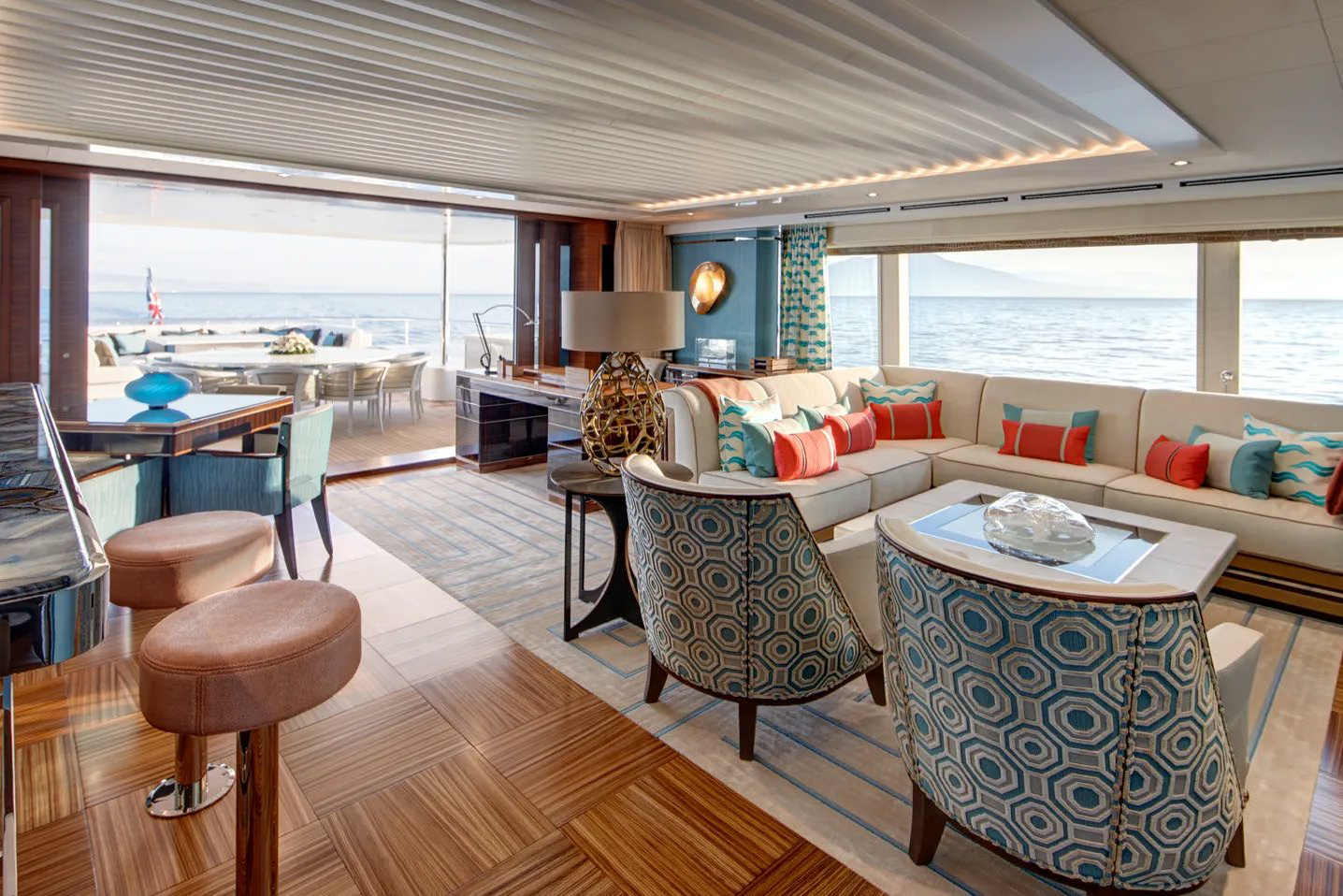
The F45 platform has produced some of Feadship’s most iconic mid‑size vessels—Familybilt (2013), Bella (2008, refit 2023), Megan (2011), Gladiator (2010, refit 2020–2023), and Harle (2007, refit 2022). Across this fleet, certain characteristics consistently appear: meticulous engineering, adaptable interior modules, Lloyd’s‑certified construction, and mechanical systems designed for true global cruising.
- Familybilt demonstrates ongoing reliability, with AIS activity confirming regular navigation and continued proper technical upkeep.
- Bella’s extensive 2023 modernization—including new generators, power management systems, teak decks, and mechanical upgrades—positions her among the best‑maintained yachts of her class.
- Gladiator stands out for a comprehensive four‑year technical and aesthetic overhaul, touching everything from engines to AV, soft furnishings to bridge systems—an exemplary case of how refits can elevate long‑term value.
- Harle remains one of the series’ charter superstars, strengthened by a 2022 renewal refit that refreshed systems and interiors.
This consistency is not accidental; it is the product of a shipyard with one of the tightest quality‑control cultures in yachting.
The Pros: Why the F45 Series Endures
1. A Proven Technical Platform
Every F45 benefitted from Feadship’s practice of engineering yachts for longevity: redundant systems, high‑spec machinery, and structural integrity that has kept even early hulls performing to modern standards.
- Example: Megan’s 2014 technical update improved core systems, supporting her continued high-quality presentation.
2. Adaptable Interiors
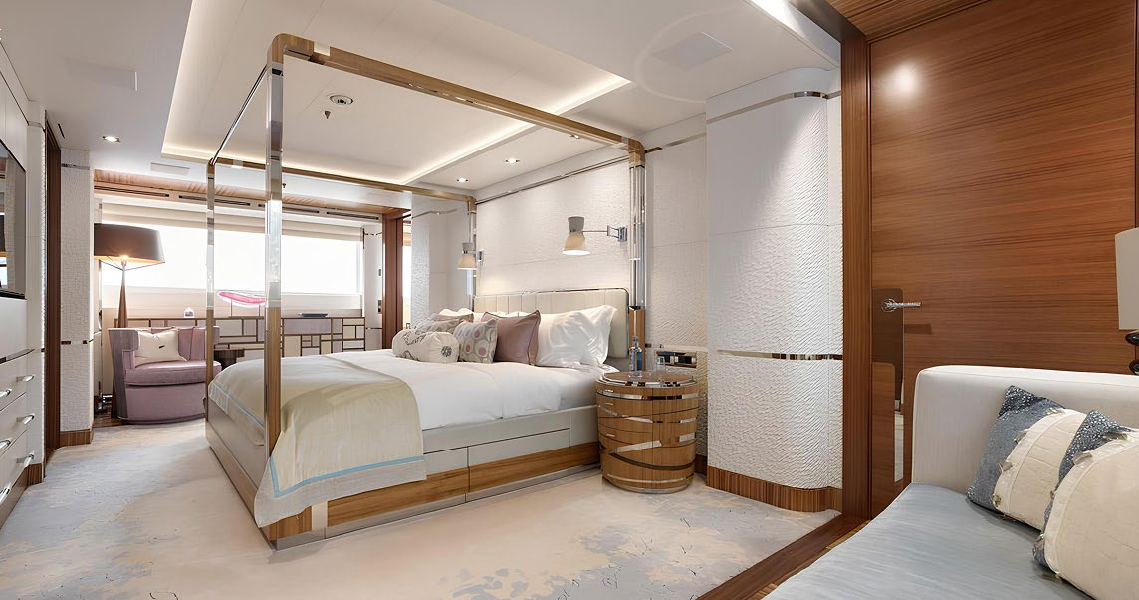
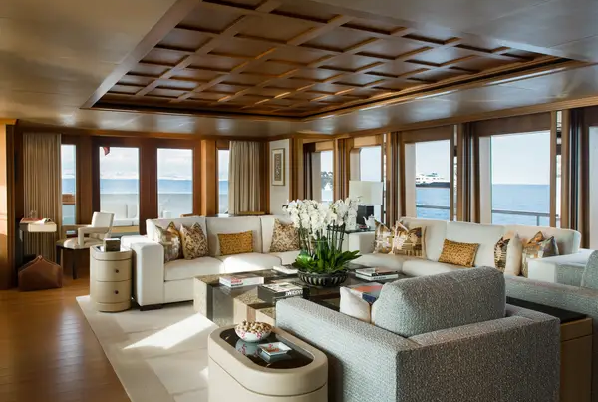
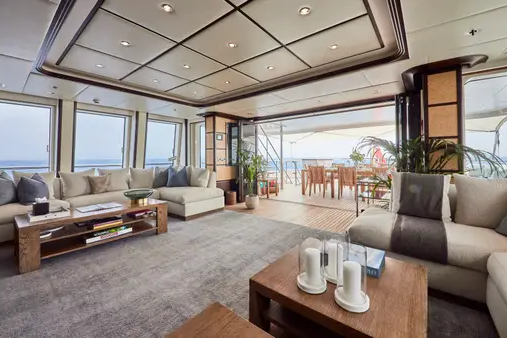
The semi‑custom platform allowed owners to configure layouts without sacrificing the efficiencies of a series build. This modularity is a large part of why the yachts remain competitive against newer vessels.
3. Strong Charter Competitiveness
Yachts like Bella, Gladiator, and Harle demonstrate that an F45, when properly refitted, performs extremely well commercially.
- Bella maintains an active luxury charter program globally.
- Gladiator and Harle enjoy consistent charter presence in both Mediterranean and Caribbean seasons.
4. Refit‑Friendly Architecture
Feadship designs its systems accessibly, enabling deep modernizations without structural compromise. Owners who invest in refits often report “new‑yacht” performance levels—visible in the cases of Bella (2023) and Gladiator (2020–2023).
5. Exceptional Resale Stability
While many yachts depreciate sharply within a decade, the F45 hulls show slower, more stable value curves. Even older hulls remain market‑relevant, and many are not actively for sale—which itself indicates strong owner satisfaction.
- Familybilt, Bella, Megan, Gladiator, and Harle are all not currently for sale, despite active operation or charter demand.
The Cons: Where the F45 Series Shows Its Age
Even a modern classic is not without limitations.
1. Age‑Related System Requirements
With hulls now 13–19 years old, ongoing investment is essential.
- Yachts like Megan, whose last confirmed refit was in 2014, risk falling behind technologically without continued updates.
2. Fuel Efficiency vs. Newer Designs
Contemporary Feadships benefit from hybrid systems, improved hull efficiency, and advanced power management. Earlier F45s require retrofits to remain competitive in environmental and efficiency expectations.
3. Limited Availability
The F45 was produced in small numbers. As most hulls are owner‑kept and off the market, buyers face extremely limited opportunities—excellent for value stability, but frustrating for acquiring one.
4. Charter Premium Dependent on Refit Quality
Only heavily updated hulls—Bella, Gladiator, Harle—achieve top‑tier charter rates. Others require investment to match these standards.
Why the F45 Series Maintains Its Value
1. Feadship Brand Equity
Feadship commands one of the strongest reputations in the industry, with resale demand that withstands generational changes in yacht design.
2. Structural and Mechanical Over‑Engineering
The hulls and systems were built to exceed class requirements. When maintained, they age far more gracefully than comparable vessels.
3. Strong Charter Revenue Potential
A yacht that charters reliably maintains economic value while offsetting operational costs—an advantage clearly demonstrated by Bella, Gladiator, and Harle.
4. Refit Potential Protects Market Longevity
The F45’s engineering makes deep refits practical, keeping the vessels competitive with new builds at a fraction of the cost.
5. Owner Retention
Perhaps the strongest indicator of value is owner behavior: most F45 hulls remain in long‑term hands, with few appearing on the brokerage market. A yacht that owners refuse to part with is usually one holding its worth.
A Lasting Feadship Legacy
The Feadship F45 series represents a rare balance between timeless design and modern adaptability. Properly maintained and periodically refitted, these yachts not only retain strong market value but also continue to offer experiences rivalling many newer vessels.
The F45s are not merely yachts—they are enduring statements of Feadship’s engineering philosophy, and proof that excellence, when built into the bones of a vessel, stands the test of time.
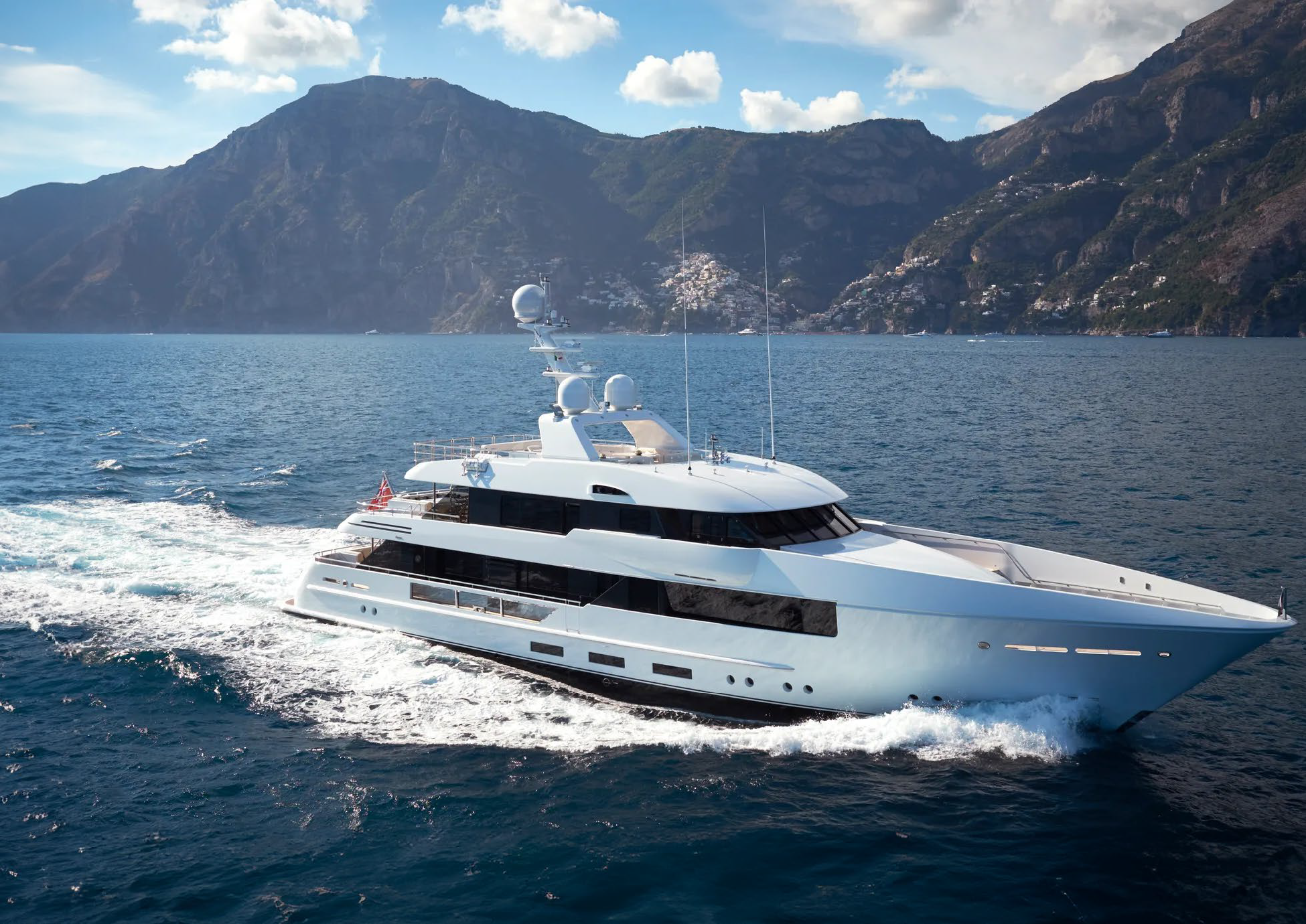
Globe Regal is presently able to offer several of the F-45’s available for sale. Please enquire for further information.