
From Monaco to shipyards across the world, a growing number of owners are discovering that the right existing vessel can offer a faster, more flexible and increasingly responsible route to the yacht they want.
A shift visible on the Côte d’Azur
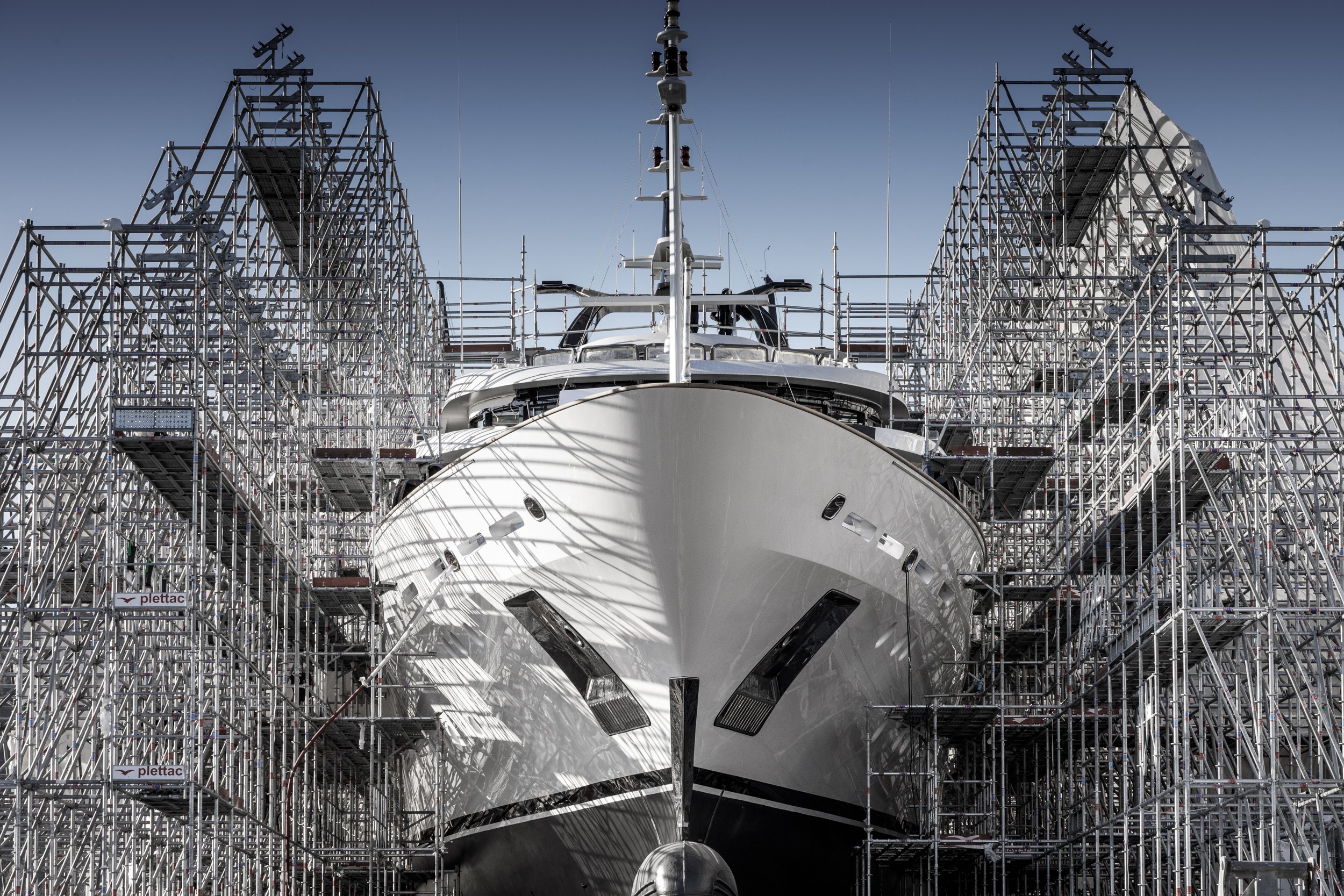
At the Monaco Yacht Show, the conversation around major refits has moved decisively into the mainstream. Three forces are converging: owners are weighing conversion against a conventional new build; technical upgrade programmes are becoming broader and more ambitious; and clients increasingly want one shipyard to assume responsibility for the complete project. The show’s own 2025 programme placed refit at the centre of the sustainability debate, while its annual report highlighted a yachting ecosystem in which innovation, environmental transition and investment strategy now sit side by side.
Market conditions add weight to the argument. Industry analysis describes a global fleet of just over 6,000 yachts, many approaching the point at which systems, interiors and operating profiles require serious reconsideration. The same analysis notes that refit demand has remained resilient even when new-build activity has softened. The Monaco Yacht Show’s 2025 market report likewise recorded weaker new-yacht sales in some size categories while used-yacht sales edged above the previous year—an environment that naturally encourages owners to examine what can be achieved with an existing platform.
That momentum is now large enough to shape the industry’s calendar. Informa Prestige, organiser of the Monaco Yacht Show, has announced a dedicated Future of Refit event for Monaco in 2027. Its market assessment values global superyacht refit and maintenance at roughly $3–5 billion a year, growing by an estimated 6–9 per cent annually. It also points to more than 6,000 active superyachts over 30 metres, many of them entering a first or second major refit cycle after the construction booms of the 2000s and 2010s. Refit is becoming a distinct industrial discipline, not an afterthought to new construction.
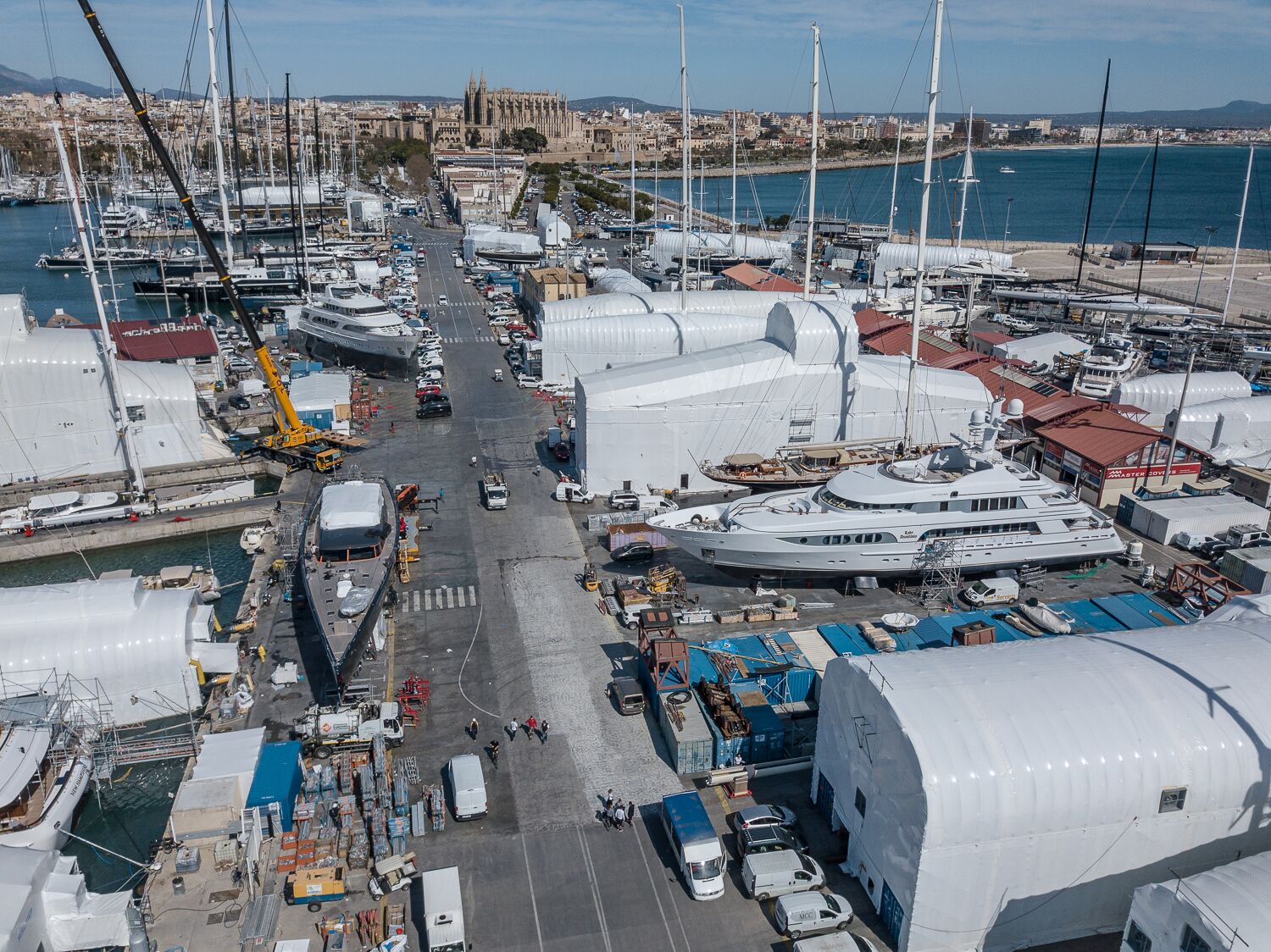
The case for transformation
A major refit can extend the operational life of a vessel by decades. A sound hull and proven structure may be retained, while propulsion, electrical generation, navigation, hotel loads, insulation, lighting, automation and onboard systems are redesigned around present-day expectations. For an owner, that means the character and seakeeping of a successful platform can be preserved while comfort, range, reliability and efficiency are transformed.
The commercial logic is equally persuasive. A proven yacht already has a known operating history, a trained crew and a platform whose behaviour at sea is understood. Acquisition may be faster than securing a coveted new-build slot, and the owner can direct capital towards the features that matter most: range, quietness, guest circulation, toy storage, wellness spaces or expedition capability. The trade-off is that every design ambition must be tested against an existing structure. Discovery surveys, laser scanning, weight studies and early engagement with class are therefore not preliminary formalities; they are the foundations of a credible budget and programme.
It can also mean creative freedom. Commercial and offshore donor vessels often bring rugged construction, generous volume and long-range capability that would be costly to reproduce from a blank sheet. Recent conversion projects across the sector demonstrate how such platforms can be stripped back, re-engineered and rebuilt as contemporary explorer yachts with advanced propulsion, updated classification and highly personalised interiors.
Conversion projects around the world show what that freedom can look like in practice. Specialist yards have transformed robust working vessels into modern expedition yachts, retaining the purposeful qualities of the original platforms while adding contemporary accommodation, advanced systems and refined finishes. Across Europe, Asia, the Americas and the Middle East, capable commercial hulls are being adapted for radically different missions. In the strongest conversions, the attraction lies not in disguising a vessel’s past, but in turning its working heritage into part of its identity.
Sustainability becomes practical
The sustainability case is not simply that reusing a suitable hull avoids starting again. The larger opportunity lies in changing how the vessel consumes energy throughout the rest of its service life. Formal energy audits can reveal mismatches between installed machinery and real operating patterns, creating a roadmap for propulsion upgrades, smarter power management, improved hydrodynamics, waste-heat recovery and quieter, more efficient hotel systems. Industry reporting suggests that modest refits can produce measurable savings, while major rebuilds may unlock far larger reductions when machinery and systems are comprehensively reconsidered.
The direction of travel is reinforced by maritime policy. The International Maritime Organization’s 2023 greenhouse-gas strategy calls for international shipping to reach net-zero emissions by or around 2050, with interim goals for lower carbon intensity and greater use of zero- or near-zero-emission technologies and fuels. Not every measure applies to every yacht in the same way, but the message for owners and yards is clear: efficiency, emissions and future fuel choices are becoming central design considerations rather than optional extras.
That makes the early audit critical. Monaco’s 2025 refit panel concluded that there is no universal solution: each vessel needs a baseline, a realistic operational profile and an investment case that connects technical choices with measurable outcomes. Owners may be persuaded not only by fuel savings, but also by reduced noise and vibration, more comfortable operation, easier maintenance and visible environmental responsibility.
The menu of interventions is broad. Modern engines can be sized around the speeds at which a yacht actually operates rather than a rarely used maximum. Battery systems can absorb transient loads, support silent periods at anchor and allow generators to run closer to their efficient operating points. Variable-speed pumps, intelligent HVAC controls, LED lighting and improved insulation can reduce hotel demand. Propeller optimisation, low-friction coatings and hull corrections address resistance. None is a universal answer; the best result comes from modelling the yacht as one energy system and ranking measures by technical risk, cost, downtime and benefit.
Why execution matters
A major refit is therefore less a collection of upgrades than a tightly choreographed engineering programme. Structural modifications affect weight, stability and classification. New engines or hybrid components reshape machinery spaces, cooling and exhaust arrangements. Revised interiors have consequences for services, fire safety and access. Success depends on disciplined surveying, design coordination, procurement, scheduling and commissioning—and on a yard capable of holding the entire technical picture.
This is also why the phrase “single point of responsibility” matters. A complex refit may bring together naval architects, interior designers, class surveyors, flag authorities, engine suppliers, electrical integrators, paint specialists and dozens of subcontractors. If interfaces are poorly managed, one late decision can cascade through structure, piping, cabling, joinery and commissioning. A lead yard with engineering depth can establish the technical baseline, control configuration changes and sequence the work so that access is available when each discipline needs it.
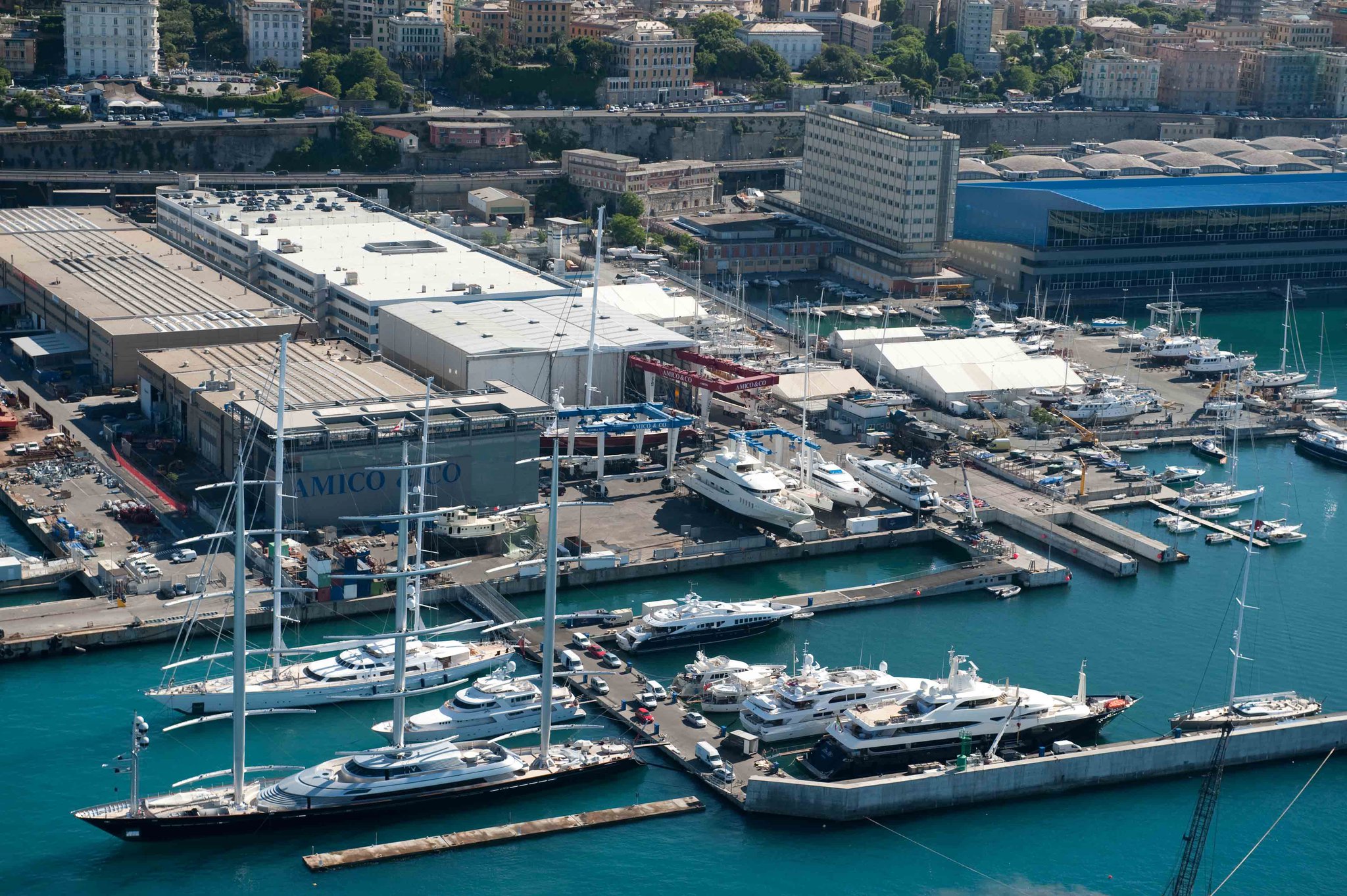
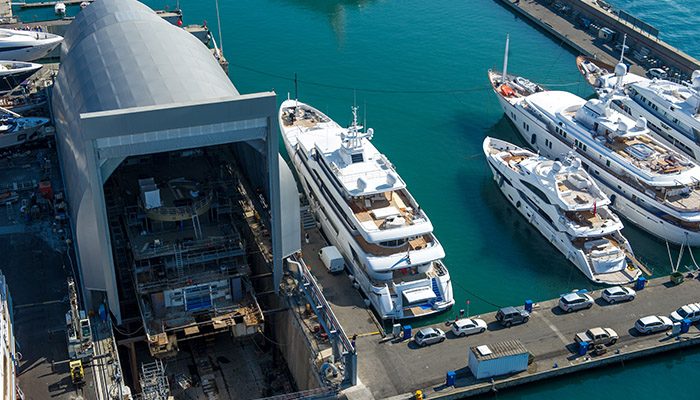
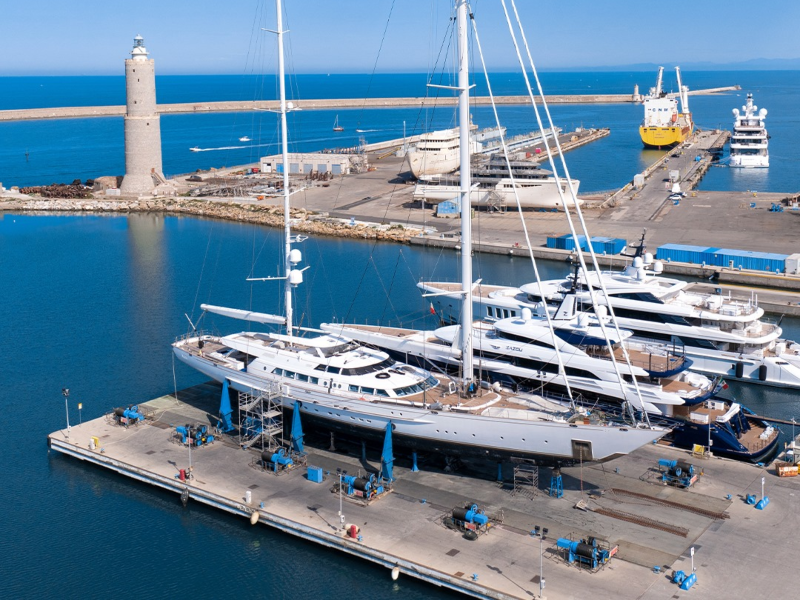
This is the type of complex work around which specialist shipyards worldwide have built their expertise. Across established maritime centres in Europe, Asia, the Americas and the Middle East, yards carry out extensive yacht rebuilds and conversions encompassing structural alterations, technical modernisation, renewed interiors and major changes to vessel performance. Purpose-built refit halls, covered docks and dedicated project teams provide the close control and multidisciplinary collaboration these programmes demand.
The strongest refit credentials are often rooted in commercial shipbuilding, repair and heavy engineering. Leading yards combine large docks and repair berths with equipped workshops, experienced technical teams and established networks of specialist suppliers. Their capabilities can include steel and aluminium extensions, machinery replacement, hybrid-system integration, interior rebuilds and class support. That combination of robust engineering and yacht-level finish is especially relevant when a donor vessel began life in fishing, research, offshore or other demanding service.
A serious alternative to starting from scratch
For owners, the essential first question is not whether an older vessel can be changed, but whether it is the right platform to change. Hull condition, volume, machinery arrangement, intended cruising programme, regulatory pathway, budget and schedule must all align. When they do, conversion can offer a compelling balance: a proven foundation, a distinctive story and a yacht tailored to a new purpose without discarding everything that already works.
The owner’s decision: five questions before committing
1. Is the platform fundamentally sound? Structural condition, corrosion, fatigue history and stability margins determine what is realistically possible.
2. Does the layout support the new mission? Volume alone is not enough; machinery access, tankage, escape routes and crew circulation must work.
3. Which outcomes matter most? Range, comfort, emissions, charter appeal and resale value may lead to different technical priorities.
4. What uncertainties remain? A disciplined contingency should reflect the quality of surveys and the likelihood of concealed conditions.
5. Who controls the interfaces? Clear governance between owner, representative, designer, yard and class is as important as the specification itself.
The future of yachting will not be defined only by what is built new, but by how intelligently the existing fleet is renewed.
At Monaco, that future felt close. Owners are asking more exacting questions about lifecycle, responsibility and value; technology has advanced far enough to provide credible answers; and experienced yards are turning ambitious ideas into deliverable projects. For the right donor vessel, a major refit is no longer a compromise. It is a strategic route to something highly personal, technically current and ready for a new chapter.